Natural Texture Seamless Patterns 01: Enhancing Design Workflows with Organic Surfaces
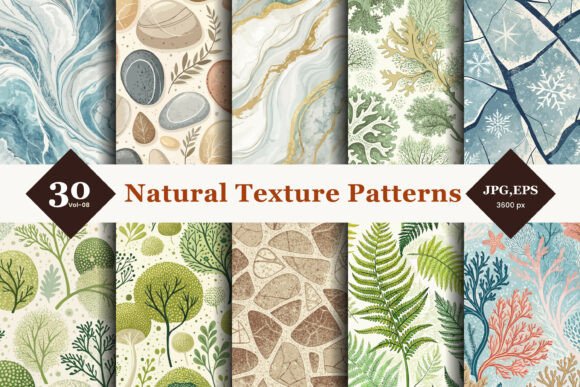
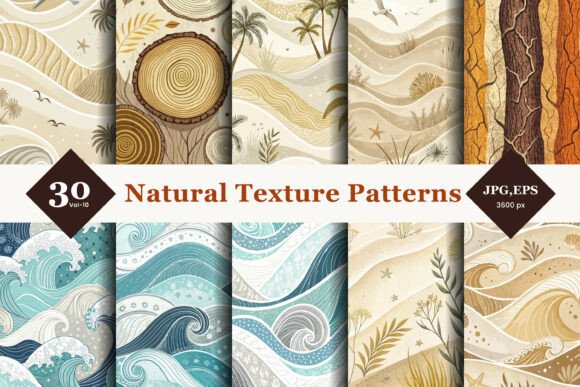
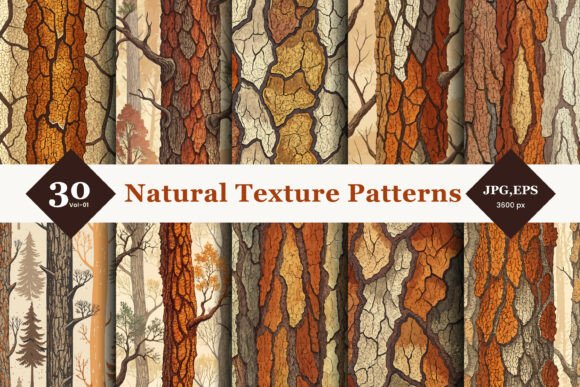
Designers, marketers, and creatives often seek textures that bring depth and authenticity to their projects. Natural Texture Seamless Patterns 01 offers a curated collection of organic surfaces inspired by natural elements like cracked earth, stones, tree bark, leaves, and forest textures. These seamless patterns serve as versatile assets across multiple creative disciplines, from print and packaging to digital design and crafting. Understanding how to integrate them effectively into your workflow can enhance both the aesthetic and functional value of your work.
What Is Natural Texture Seamless Patterns 01?
Natural Texture Seamless Patterns 01 is a design resource containing 30 unique patterns derived from real-world textures. Each pattern is crafted to tile seamlessly, ensuring visual continuity across large areas. The collection includes high-resolution JPG files at 300 DPI and editable EPS vector files, allowing for scalability without loss of quality. These formats make the patterns suitable for both digital and print applications, providing flexibility for a wide range of creative professionals.
Unlike generic textures, this collection is designed with organic imperfections and variations that mimic nature. This realism adds tactile depth to designs, making it especially valuable for nature-themed branding, packaging, editorial layouts, and background elements in digital media.
How to Use Natural Texture Seamless Patterns 01 in Your Creative Workflow
Integrating Natural Texture Seamless Patterns 01 into your design process can happen at multiple stages, depending on your project type and goals. Here’s how to make the most of this resource throughout your workflow:
Preparation and Planning
Before diving into design execution, consider the visual tone and message of your project. If you're working on a brand identity for an eco-friendly product, a nature-inspired texture can reinforce the theme. During the planning phase, review the pattern library to identify which textures align with your concept. This early selection helps maintain consistency in your design direction and saves time during execution.
Organizing the patterns into categories—such as earth tones, leaf patterns, or stone textures—can streamline your workflow. You can create custom folders in your design software or asset management system for quick access.
During the Design Process
Once you begin designing, Natural Texture Seamless Patterns 01 can be applied as background layers, overlay textures, or base surfaces for illustrations. Because the patterns are seamless, they can be tiled across any canvas size without visible repetition or distortion. This makes them ideal for large-format prints like posters, banners, or packaging wraps.
- For print projects: Use the 300 DPI JPG files for sharp, high-quality output.
- For digital work: The EPS files allow for scalable use in web graphics, mobile app backgrounds, or social media templates.
- For layered compositions: Apply textures as overlay layers with blending modes in Photoshop or Illustrator to add depth without overwhelming the design.
When designing packaging or product mockups, consider how the texture interacts with other design elements like typography or logos. A rough stone texture may pair well with bold sans-serif fonts, while a soft leaf pattern might complement more delicate script typography.
Post-Design and Delivery
After finalizing your design, ensure that the patterns are correctly embedded or linked in your project files. If you're handing off the work to a client or printer, include the appropriate file formats and instructions for use. The EPS files are especially useful for printers who may need to adjust the size or color profile.
If you're using these patterns for digital assets, test how they render across different screen sizes and resolutions. Because the patterns are vector-based, they maintain clarity even on high-definition displays.
Integration with Other Tools and Platforms
Natural Texture Seamless Patterns 01 is compatible with most major design software, including Adobe Photoshop, Illustrator, InDesign, and Figma. They can also be used in non-Adobe platforms like Affinity Designer, Procreate (for digital illustration), and Canva (for web-based design projects).
Here’s how to integrate the patterns effectively:
- Photoshop: Load the JPG or EPS files as pattern swatches or smart objects for non-destructive editing.
- Illustrator: Use the EPS files directly as vector patterns or apply them as texture overlays.
- InDesign: Import patterns as background elements for magazine spreads, brochures, or book covers.
- Canva: Upload JPG files as background images for social media posts or digital presentations.
For web developers or UI designers, these textures can be exported as optimized PNG or JPG files and used in CSS backgrounds or layered components. Because they’re seamless, they can be repeated across web elements like buttons, banners, or full-page backgrounds without visual disruption.
Practical Tips for Long-Term Use and Organization
Like any design asset, maintaining an organized system for using and reusing Natural Texture Seamless Patterns 01 ensures efficiency and consistency over time. Here are some practical tips:
- Create a texture library: Store all patterns in a dedicated folder with subfolders based on theme (e.g., earth, stone, foliage).
- Use naming conventions: Label files clearly (e.g., “Pattern_Stone01_JPG” or “Pattern_Bark03_EPS”) for quick identification.
- Backup your files: Keep a cloud or external drive backup of the patterns to avoid loss due to device failure.
- Version control: If you modify a pattern for a specific project, save a copy with a version number to preserve the original.
For teams or collaborative projects, establish a shared resource system where all members can access and apply the patterns consistently. This could be a shared drive, cloud storage, or integrated into your design system or brand kit.
Use Cases Across Industries
Natural Texture Seamless Patterns 01 finds applications across a variety of creative and business contexts. Here are a few examples:
- Product packaging: Add organic texture to eco-friendly product boxes, labels, or inserts.
- Editorial design: Enhance magazine layouts, book covers, or infographic backgrounds with natural depth.
- Digital marketing: Use textures in social media graphics, email templates, or landing pages for a tactile aesthetic.
- Craft and DIY: Print patterns onto fabric, paper, or vinyl for handmade cards, scrapbooks, or home decor items.
- Brand identity: Support a nature-themed brand with consistent textures across logos, stationery, and promotional materials.
These use cases demonstrate the adaptability of the pattern set across both physical and digital mediums. Whether you're a freelance designer, a small business owner, or part of a larger creative team, integrating these textures can elevate your visual output with minimal effort.
Quality and Consistency Considerations
One of the key advantages of Natural Texture Seamless Patterns 01 is the combination of high resolution and vector scalability. The 300 DPI JPG files ensure sharp print results, while the EPS files allow for infinite resizing without pixelation. This dual-format approach supports both print and digital professionals who need flexibility in output size and medium.
To maintain consistency across projects, it’s important to test how each pattern behaves under different lighting or color conditions. Some textures may appear more pronounced on dark backgrounds versus light ones. Previewing patterns in context helps avoid unexpected visual outcomes.
Additionally, when using multiple patterns within a single project, aim for a cohesive visual language. Mixing too many different textures can lead to clutter. Instead, select one or two dominant patterns and use them strategically to highlight key areas without overwhelming the design.
Conclusion: Streamlining Creativity with Natural Texture Seamless Patterns 01
Incorporating Natural Texture Seamless Patterns 01 into your design process enhances both the aesthetic and functional quality of your work. From early planning to final delivery, these patterns offer a flexible, high-quality solution for a wide range of creative needs. Whether you're designing a product label, crafting a digital campaign, or creating a custom illustration, this collection provides the tools to bring organic depth and authenticity to your visuals.
By organizing, integrating, and applying these textures thoughtfully, you can streamline your workflow while maintaining a consistent and professional output. As part of a broader creative toolkit, Natural Texture Seamless Patterns 01 supports efficiency, quality control, and long-term usability—making it a valuable asset for designers and creators at any level.